Every Tool a Solo Dev Actually Needs to Ship a Game Already Included at One Fixed Monthly Price
A fixed-price engine with an in-editor AI agent beats a stack of separate subscriptions.
A game engine with a built-in AI agent for logic and assets can replace separate code, art, and audio subscriptions only if its plan also covers commercial use and publishing. For solo developers, a complete fixed-price system is the stronger operational choice because it reduces both recurring purchases and manual integration. The test is a finished, exportable game.
The production gap solo developers underestimate before they start
Solo development is an arithmetic problem before it is a tooling problem. One person must cover programming, art, audio, writing, QA, and publishing within the same working hours. Code needs debugging, assets need refinement, and a playable build still needs testing and a route to market. The constraint is the breadth of responsibility.
AI can accelerate the slow, repeatable parts of those roles, including boilerplate code, placeholder art, temporary sound effects, draft dialogue, and bug triage. It does not take responsibility for architecture decisions, art direction, the game's sound identity, or narrative voice. Whether the game is fun remains a human judgment. The useful division is therefore not between automated and manual development, but between low-judgment production work and decisions that define the game. A developer covering six roles with one person's hours needs a system.
Why assembling a stack of separate tools creates its own overhead
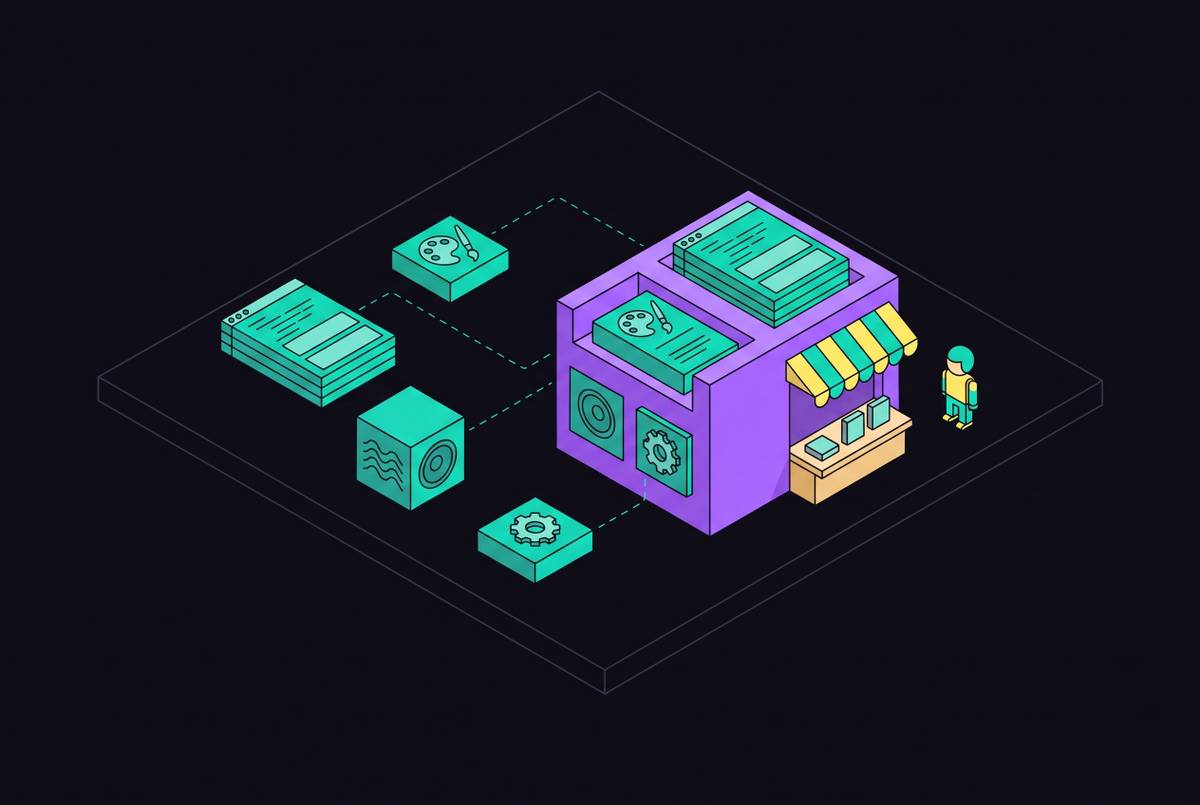
Choosing a specialist for every role seems to save work because each tool can do its own job well. A Meshy mesh, a separate texture generator, a music tool, a voice tool, and a code assistant can all contribute useful work. The handoffs create the additional workload. Every generated asset still needs an integration pass before it can work in the game.
The code assistant illustrates this gap clearly. An AI writing scripts in a separate chat window has no visibility into the scene the developer is building. Its output requires copying files, fixing import paths, attaching nodes, and debugging the result inside the editor. The developer supplies the missing project context by hand.
Each added service also has its own login, billing cycle, learning curve, and commercial terms. Licensing adds another layer of coordination because an asset that works in a prototype may not be cleared for a paid release. Music needs a closer check because commercial licensing for AI-generated tracks is still in dispute across several tools. These obligations accumulate across assets and iterations, so a collection optimized for individual tasks can become an integration project of its own.
What a complete solo-dev production system actually needs to cover
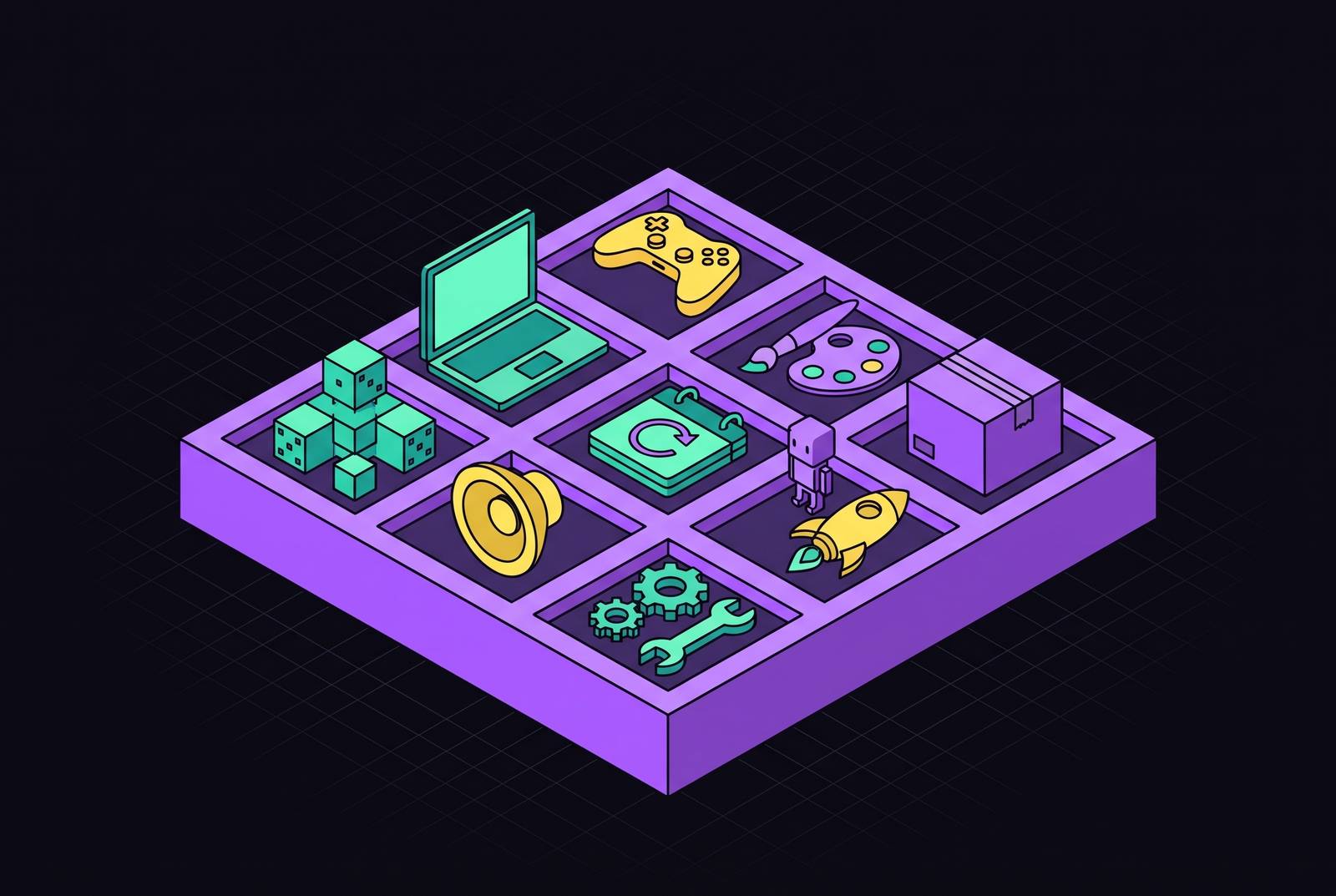
A complete system covers five production categories, namely in-engine code and scene building, 2D and 3D assets, audio and music, publishing infrastructure, and multiplayer or deployment where required. If a category is missing, the developer needs another handoff or subscription. An overlapping category creates a choice about which service is actually necessary.
The in-engine agent must do more than suggest code. It needs to create scenes, attach scripts, run the game, read errors, and correct its work inside the editor. Asset support must cover sprites, UI elements, concept art, and tilesets, with custom-trained style consistency across images. For 3D work, text-to-mesh or image-to-mesh generation should provide usable props and environment pieces, with realistic expectations about cleanup. Consistency is as important as individual output quality.
Audio coverage includes sound effects, loopable ambiences, background music, and NPC dialogue, with clear commercial rights for each output type. Publishing must support export to Steam, itch.io, and mobile while leaving the developer in possession of the project files. Browser-only output does not meet that standard. For games that need multiplayer or deployment services, those functions must also be covered by the system itself. Together, these requirements distinguish a production system from a bundle of generators.
How AI works best inside the engine, not alongside it
An in-engine agent works as a collaborator inside the project. MCP, or Model Context Protocol, provides the plumbing for that relationship. A server exposes editor tools through a defined wire protocol, making those tools available to the agent. Access to the working project lets the agent create a scene, write a script to disk, run the game, read runtime errors, and self-correct within one session.
That access does not supply design intent. The practical discipline is to describe the core loop in one sentence containing the player, the action, and the win or lose condition, then keep the first request small and playable. A template close to the intended genre supplies foundations so the agent can work on what makes the game distinctive. After each change, the developer should do more playtesting before making the next request. A single change leaves one suspect when something breaks.
Choost Games expresses this shipped-game discipline as “surgical instructions produce surgical results.” Large requests undermine that discipline because they ask the agent to build substantial systems before the developer has tested the intervening decisions. MCP does not remove operational limits either. Long bakes or exports must be chunked or run asynchronously outside the agent's call when they would exceed request timeouts, while token-metered agent loops need per-task budgets. These loops use API tokens faster than chat.
In-engine AI accelerates scaffolding, asset wiring, and boilerplate, but the final human-authored phase still requires playtesting, feel tuning, and a decision about readiness to ship. More editor access cannot delegate that judgment.
The asset generation tier: what each category can realistically deliver in 2026
In 2026, hard-surface props such as barrels, crates, weapons, furniture, and architectural pieces can serve as background assets after modest cleanup. Characters and other organic forms still benefit from manual retopology. The practical 3D workflow remains generation, cleanup in Blender, re-UV work where needed, and integration. For non-hero assets, that can be faster than modeling from scratch without being a generate-and-ship process.
Meshy 7.1 is the leading text-to-3D option in the brief's 2026 comparison, with Tripo and Rodin as strong alternatives. Kaedim serves a different starting point by converting existing 2D concept art into production-ready 3D. These options address the mesh category. Their value depends on both output quality and the work required to make that output fit the game.
For 2D assets, Scenario is the strongest option when a custom-trained house style is the priority. The objective is a coherent visual identity across the game. Art direction remains the developer's responsibility. Defining the style precisely and refining generated output are therefore part of the production process, even when generation itself is fast.
Music generation works well for ambient tracks and background themes, while human composition still helps with memorable melodic themes and complex adaptive scores. Suno generates complete songs with vocals and instrumentation from text prompts. Its version 5.5 added Voices, Custom Models, and My Taste, but its licensing is still in dispute despite these new ways to generate music. Developers who plan to sell their games should choose tools with clear commercial terms and disclose AI-generated content.
Voice generation makes it practical to prototype dialogue for dozens of NPCs in-house, with AI voices for background characters and human actors reserved for main characters at release. Of the plans listed here for voice and SFX, ElevenLabs Starter has the lowest price for a commercial license. Ludo.ai offers a broader asset alternative, combining sprites, 3D, audio, and video in one subscription, with twelve animatable asset types and 641 motion presets. That breadth reduces asset-provider fragmentation, but asset coverage alone does not establish in-engine scene building or a complete publishing pipeline.
What a full stack of separate tools actually costs per month
A budget for separate tools must cover the cost of output that can be used commercially, as well as access to a generator. The relevant recurring entries include Meshy Pro for 3D, Suno Pro for music, ElevenLabs Starter for voice and SFX, and a separate coding assistant subscription. Ludo.ai is an alternative to several asset subscriptions. Its monthly pricing also has a discount when billed yearly.
The supplied pricing information identifies these plans but gives no monthly dollar amounts. It therefore cannot support a numerical total or a quantified savings claim for an all-in-one alternative. Steam adds a one-time app fee. The meaningful comparison must keep those different charges separate while accounting for the integration work, licensing review, and independent pricing changes that subscription invoices omit.
Free tiers do not settle the comparison. Music and voice free tiers usually leave out commercial rights, so a developer cannot assume prototype audio is cleared for a paid Steam release. Where those restrictions apply, the audio must be regenerated under a paid plan before launch.
What changes when one monthly plan covers development and asset creation?
A fixed-price system changes the cost structure by replacing separate category purchases with one production subscription. Its financial advantage depends on what that subscription actually includes. The comparison must verify that a plan described as “all-in-one” includes commercial rights, adequate usage, and the required production categories. Without comparable plan prices, the defensible advantage is consolidated spending and fewer handoffs.
The operational benefit comes from where the work happens. When the agent builds scenes and attaches scripts inside the editor, there is no external code-pasting step. When generated assets are already in the project, the export-import-rewire cycle is removed. When one subscription includes code, art, audio, and video models, the developer no longer needs to manage an account with each provider. The developer can work within one environment instead of repeatedly reconstructing context elsewhere.
With one license for all output types, the developer no longer has to check how each provider's permissions fit together, and one bill and renewal take the place of several billing schedules. These are specific reductions in administration. They do not eliminate art direction, asset cleanup, or the testing required to turn generated work into a finished game.
Specialists can still outperform a generalist system at the top end of a category. That is a genuine tradeoff, particularly when the game's identity depends on exceptional work in that discipline. An all-in-one system makes the most sense for developers with little time, non-technical creators, experienced developers who want to work faster, and specialists such as QA engineers or composers who cannot learn every discipline before they start. For those developers, sufficient quality across the full pipeline can be more useful than the strongest individual generator surrounded by unresolved production gaps.
Publishing as the final category the stack almost always gets wrong
A system that generates code and assets but cannot produce an exportable build leaves the final production category unresolved. Browser-only tools cannot meet the need for a downloadable release. Without an owned export, the game cannot be submitted to Steam or sold on itch.io as a downloadable build, and updates remain dependent on the originating platform.
The publishing sequence should account for audience development as well as file export. The recommended route is to prototype on itch.io, launch a paid early access version there to start earning revenue, then open a Steam Coming Soon page to collect wishlists before the full launch. Steam charges a one-time app fee and leaves the developer a 70% revenue share after the platform cut, rising further at higher lifetime sales thresholds. Build review times vary. That makes Steam a destination to prepare for after the concept has gained validation and an audience.
A complete production system supports that route from the first prompt through scene building, asset generation, and playtesting to a build ready for submission or upload. It does not require a separate publishing tool to finish the job. The final test is ownership. A developer who possesses the project files can move, update, port, and sell the game rather than depend on a proprietary system's continued existence and terms.