The Solo Dev Stack That Was Four Separate Tools and Is Now One Subscription With a Storefront Included
An in-engine AI agent can fold your tools into one subscription.
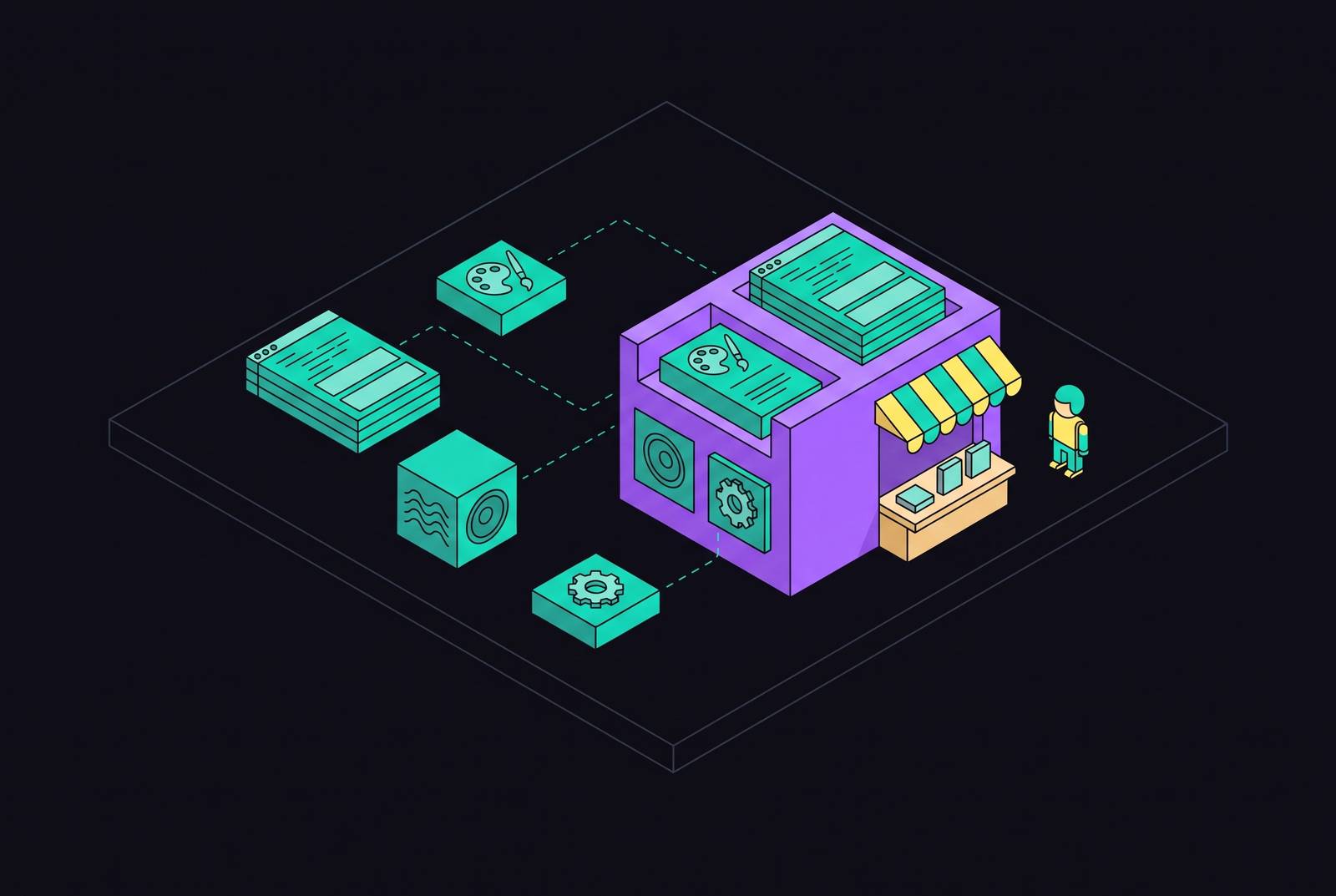
An AI game development subscription can replace separate coding, asset-generation, and publishing tools when its agent works inside the engine and connects production to an integrated storefront. The publishing pipeline must do more than an export button can. That consolidation reduces tool management, but the available details do not establish a named product with built-in deployment to Steam, itch.io, and mobile, and a storefront does not supply an audience.
How the solo dev stack looked before consolidation started
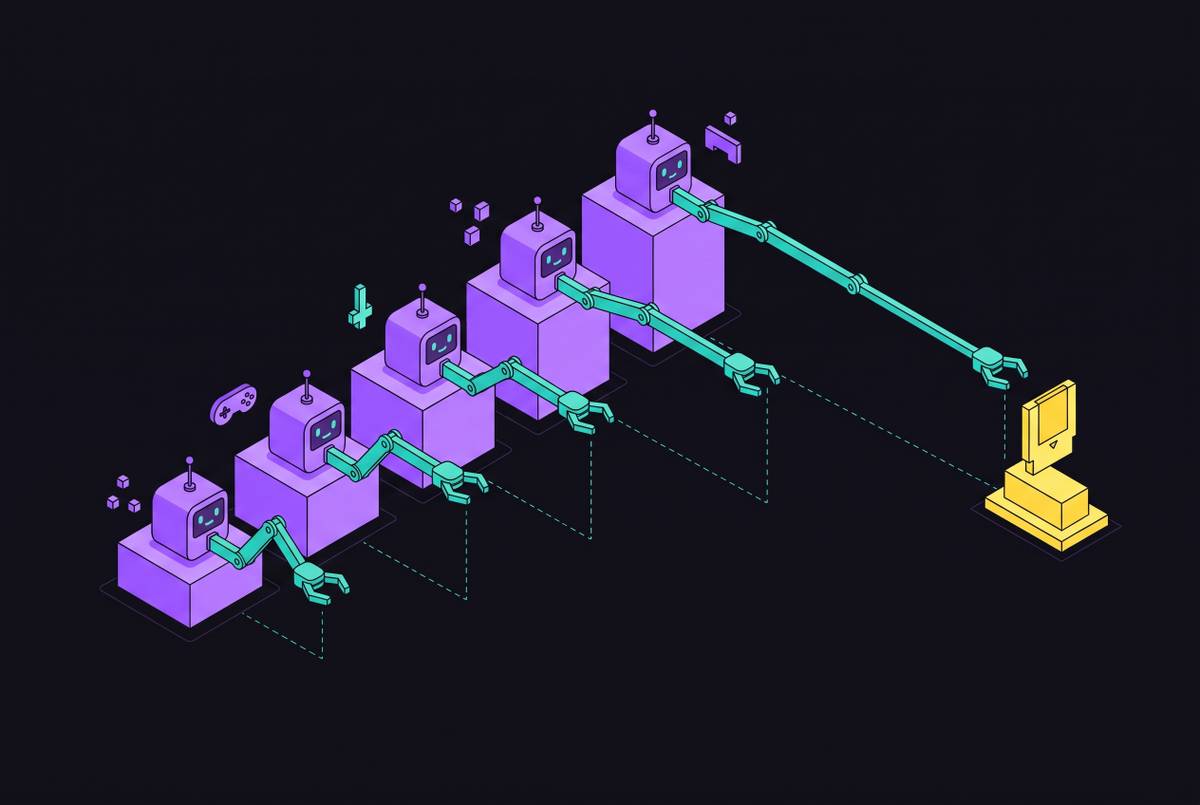
The productive solo developer’s paid stack was a chain of specialized tools, each covering a production role that a larger team could assign to someone else. Those roles included code assistance, visual asset generation, 3D modeling, audio and music, and publishing or distribution. Audio alone could take separate tools for music and voice, and publishing meant another account and a submission workflow after the game was made.
A concrete version of that stack combined a code assistant for boilerplate and debugging, an image generator for sprites and concept art, and a mesh generator for props and environments. A music generator made original tracks with commercial rights, and another tool made voice or sound-effects. That meant five subscriptions before the publishing workflow. Each tool could be useful on its own, yet the developer still had to connect their outputs into a playable game.
The cost was not confined to billing. Moving from a script to an asset to a track meant leaving one tool’s context and setting up the context needed in the next. The developer supplied the continuity that the tools lacked, repeatedly translating the same game into different requests and production constraints. IGDA’s cited finding that most self-employed indie developers earn very little per year puts that overhead in perspective. For that developer, subscriptions that cover the same work draw on a small budget, and each handoff takes attention away from finishing the game.
What each slot in that stack was actually solving
Code assistance helped with code the developer had to write again and again, but the game still needed to be designed. Inventory systems, save/load, state machines, and collision handling all take time even when the developer understands how they should work. A coding assistant reduced the hours spent writing that boilerplate and provided a first pass at debugging before a search on Stack Overflow. Its value was practical and relatively easy to identify. It shortened work that the developer might already have completed many times in other projects.
For 2D art, one good-looking sprite was not enough when hundreds needed the same palette, line weight, and perspective. Scenario’s custom model training learned the game’s visual identity so that the developer did not have to clean up every output by hand to make it fit. Meshy AI addressed the separate task of turning descriptions or reference images into meshes with PBR textures. Its file formats include FBX, OBJ, and GLB/GLTF, and its free tier offers roughly 5 basic models as a small first step into work that otherwise takes modeling skills and time.
Other tools supported decisions and deliverables outside code and visuals. Music, voice, and sound-effects generators covered distinct audio needs, while planning tools helped structure sprints, draft GDD sections, and constrain feature scope. Ludo.ai occupies that pre-production space through game ideation and research. Publishing remained a separate operational role. itch.io offered a fast, low-cost launch path, while Steam offered mass-market reach, with each requiring its own account, submission workflow, and attention to platform requirements.
Why the in-engine AI agent is the structural change that makes consolidation possible
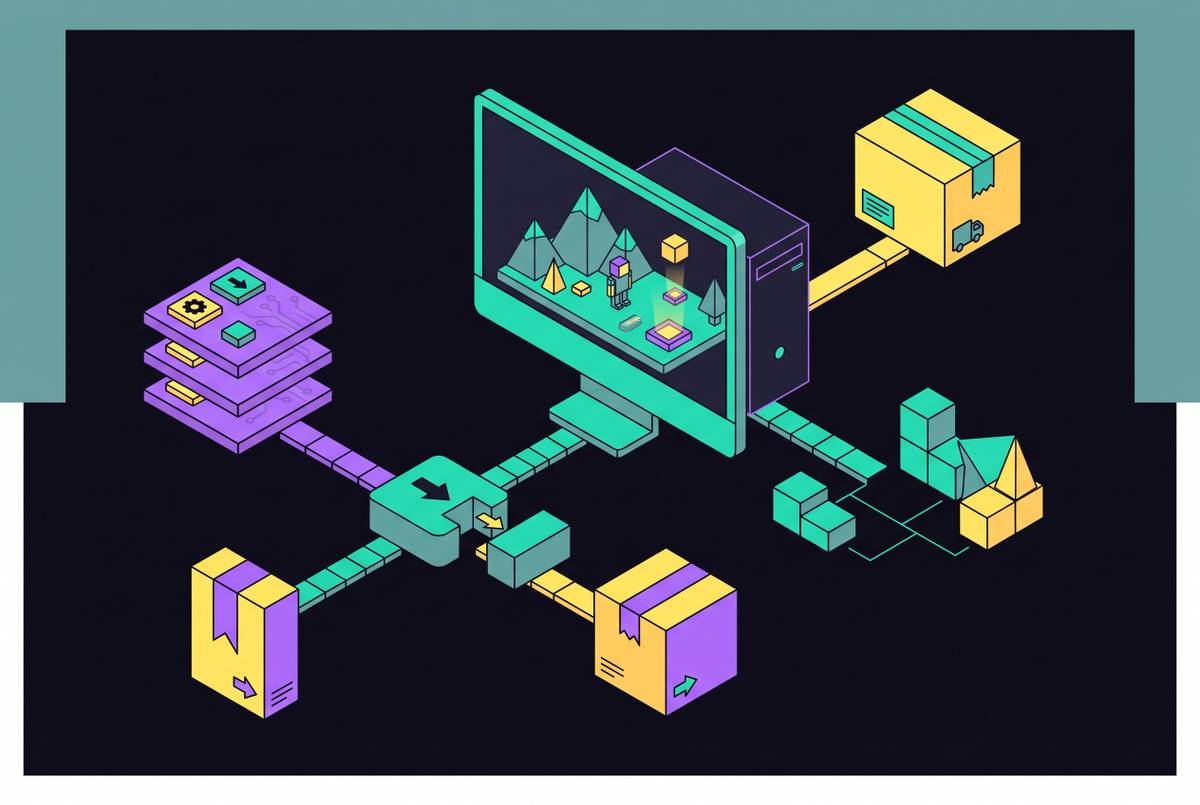
The architectural change is AI moving from an external conversation into the engine editor. An external code assistant must work from the project details supplied to it, which can leave it guessing at scene structure and node names. The developer then applies the output and discovers whether those guesses were correct. An in-engine agent works against the live project. It can create nodes, write scripts to disk, run the game, read runtime errors, and correct its work within the same session.
The agent writing a player movement script can also place the sprite, inspect a collision error, and revise the implementation without requiring the developer to transfer the problem into another interface. Asset generation can be part of that same sequence through MCP servers for 3D generation and scene management. One makes GLB assets, and another puts assets in the editor. This lets the agent generate and place assets in one session, but it does not show whether the subscription includes every service used.
Live feedback also helps with version drift. A model trained on older engine code can emit deprecated syntax, leaving a plausible-looking script that fails in the current project. The standard mitigation is to specify the exact engine version in every prompt. An agent with access to editor and debugger errors has an additional advantage because it can detect and correct a mismatch instead of handing the entire repair back to the developer. Where the build and publishing pipeline is integrated too, the agent that ships the game is the same one that wrote it.
What the consolidated stack actually covers today and where the gaps remain
An AI-native engine with an integrated studio can bring code generation, debugging, scene construction, and asset generation into one subscription. Textures, sprites, and 3D mesh drafts then belong to the production workflow, replacing a succession of external exports. The build pipeline and publishing path can complete that consolidation. Including these specific functions removes the need for separate subscriptions only when those subscriptions were serving the same production needs.
A game with a tightly defined visual identity may need hundreds of sprites to share details that general asset generation does not reliably preserve. Scenario can still help with that through custom training on a small set of examples.
Audio and pre-production create similar choices. Suno and Udio make music, ElevenLabs makes voice content, and AIVA offers jam-paced composition, though an engine subscription with audio generation can do much of that work. Ludo.ai’s Indie and Pro tiers, free trial, and Studio tier address a different stage through concept tools, market research, and asset capabilities spanning sprites, 3D, audio, and video. Consequently, a realistic monthly budget remains a range determined by the project’s needs, and the financial gain comes from eliminating redundancy.
Can an AI game engine publish to Steam and itch.io without separate tools?
A storefront built into the engine changes where production ends and distribution begins. In the fragmented stack, finishing a build meant entering another system, another account, and another set of publishing tasks. An integrated storefront makes distribution part of the production environment. That is more than an export shortcut. It closes a workflow gap, but publishing to the engine’s own storefront must still be distinguished from deploying to an external platform.
That distinction is essential when evaluating Steam, itch.io, and mobile support. An export produces a build, whereas a publishing pipeline must address the route by which that build reaches its destination. The available details establish the case for integrated publishing but do not identify a named engine with direct deployment to all three destinations. itch.io is free to publish on and has a revenue share strongly favouring the creator, making it suited to jams and experimental projects. Steam offers mass-market reach with a one-time per-game fee and a significant platform cut. Most indie developers use itch.io to test and collect feedback before moving a polished game to Steam, so an integrated workflow must be understood against that two-stage process.
Publishing also involves knowing what is in the build. Valve updated its AI disclosure form in January 2026 to focus on content that ships with the game and is consumed by players, explicitly excluding AI-powered developer tools used for workflow efficiency. AI voice lines that ship with the game still need pre-generated content disclosure. That distinction means developers need to track asset provenance while making the game as well as when submitting it. A single pipeline gives developers a way to track generated assets from creation to submission, but having the tools work together does not prove that a product records everything required on its own.
What consolidation does not solve about discovery
Lower production barriers allow more developers to ship. They also allow more games to compete for the same attention, so the benefit to an individual creator does not translate directly into visibility. New-release volume on itch.io and Steam has grown substantially as production has become more accessible. A consolidated subscription reduces the work needed to put a game in front of potential players. Those players may still overlook the game or lack a reason to stay.
The pressure also affects testing before launch on itch.io, which has long been a low-cost place for small games to get feedback and start to build an audience. A noisier new-releases feed makes that early signal harder to obtain, weakening the feedback loop on which a later Steam release may depend. A game can be technically ready for testing without attracting enough attention to learn from players.
This changes what the time and money saved through affordable tools can accomplish. When access to a production pipeline becomes less distinctive, the game’s creative identity and the developer’s community-building become more important sources of differentiation. Subscription savings cannot substitute for either. The constructive response is therefore to connect faster production with opportunities for players to encounter and discuss the game before the final release, rather than treating faster completion as a discovery strategy in itself.
Using the consolidated stack at game-jam pace to build the audience before the launch
The practical strategy is to treat game jams as distribution events as well as production deadlines. A jam gives a small game a context in which people can encounter it, respond to it, and follow its development. The in-engine agent removes much of the slow work of writing and wiring code, but it does not decide which features deserve to survive. The first hour remains the most important one. Before touching a tool, the creator must decide what to cut, what makes the experience intentional, and what a playable demo should invite players to discuss.
For that pace, the recommended stack is deliberately narrow. It uses one runtime environment, one general reasoning or coding assistant, and at most one specialist generator for the asset type that would otherwise block progress. Adding tools that do the same work makes handoffs harder, leaves files that do not match, and adds decisions just when the developer needs to keep moving. Consolidation is useful here because it keeps implementation and correction in a continuous working context.
Comments, ratings, and wishlist conversions can make jam entries a source of market research for a subsequent Steam launch, giving the creator evidence of interest before entering a noisier release environment. The developer who once spent scarce attention managing four or five subscriptions can redirect it toward a more distinctive experience and sustained contact with players. The remaining work belongs to the creator, who now has more room to choose what deserves to be made and give people a reason to care about it.